Creating a Flexible Energy Model for Fleete’s Electric Freight Network

At a glance
daily HGV movements modelled in demand scenarios
year freight electrification forecasting horizon developed
Challenge
Powering the future of electric freight infrastructure
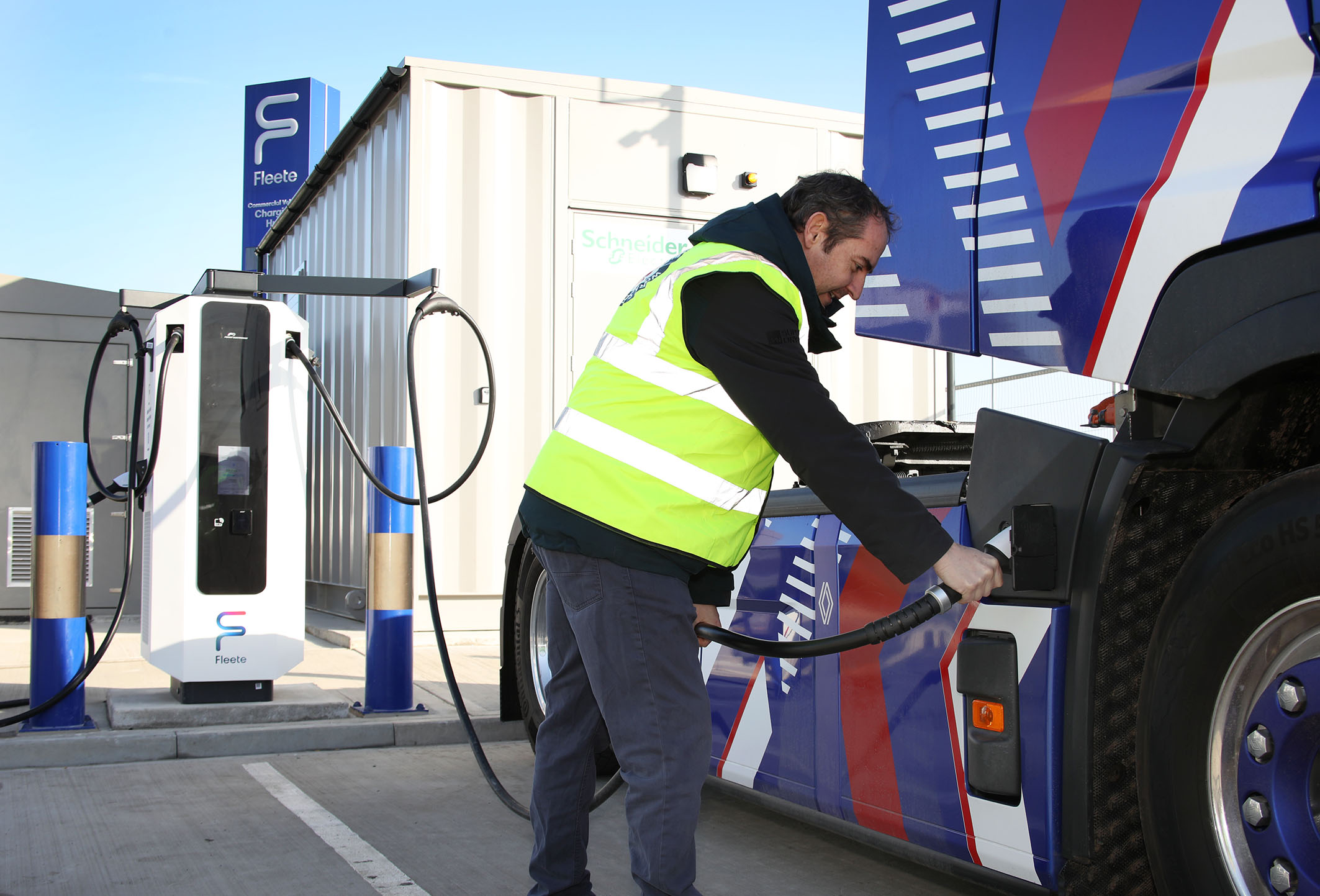
Fleete is building one of the UK’s largest HGV charging networks, with its first major site located at the Port of Tilbury. Delivering a project of this scale required overcoming several unique energy challenges.
Unlike a standard grid-connected site, the Port operates as both a private Distribution Network Operator (DNO) and electricity supplier, meaning any third-party energy provider had to work within bespoke governance arrangements and comply with specific supply agreements. At the same time, the Port was tied to a fixed energy contract agreed during a period of exceptionally high market prices, limiting flexibility and creating cost pressures.
The project also presented a significant forecasting challenge. As one of the UK’s first megawatt-scale HGV charging hubs, there was no established benchmark for modelling future energy demand. Fleete needed to understand how freight electrification, vehicle movements, charging utilisation and energy consumption would evolve over the next two decades.
With thousands of HGVs passing through the Port daily and freight decarbonisation accelerating, accurate forecasting was essential to support long-term planning and investment.

Solution
Building a flexible supply strategy around long-term growth
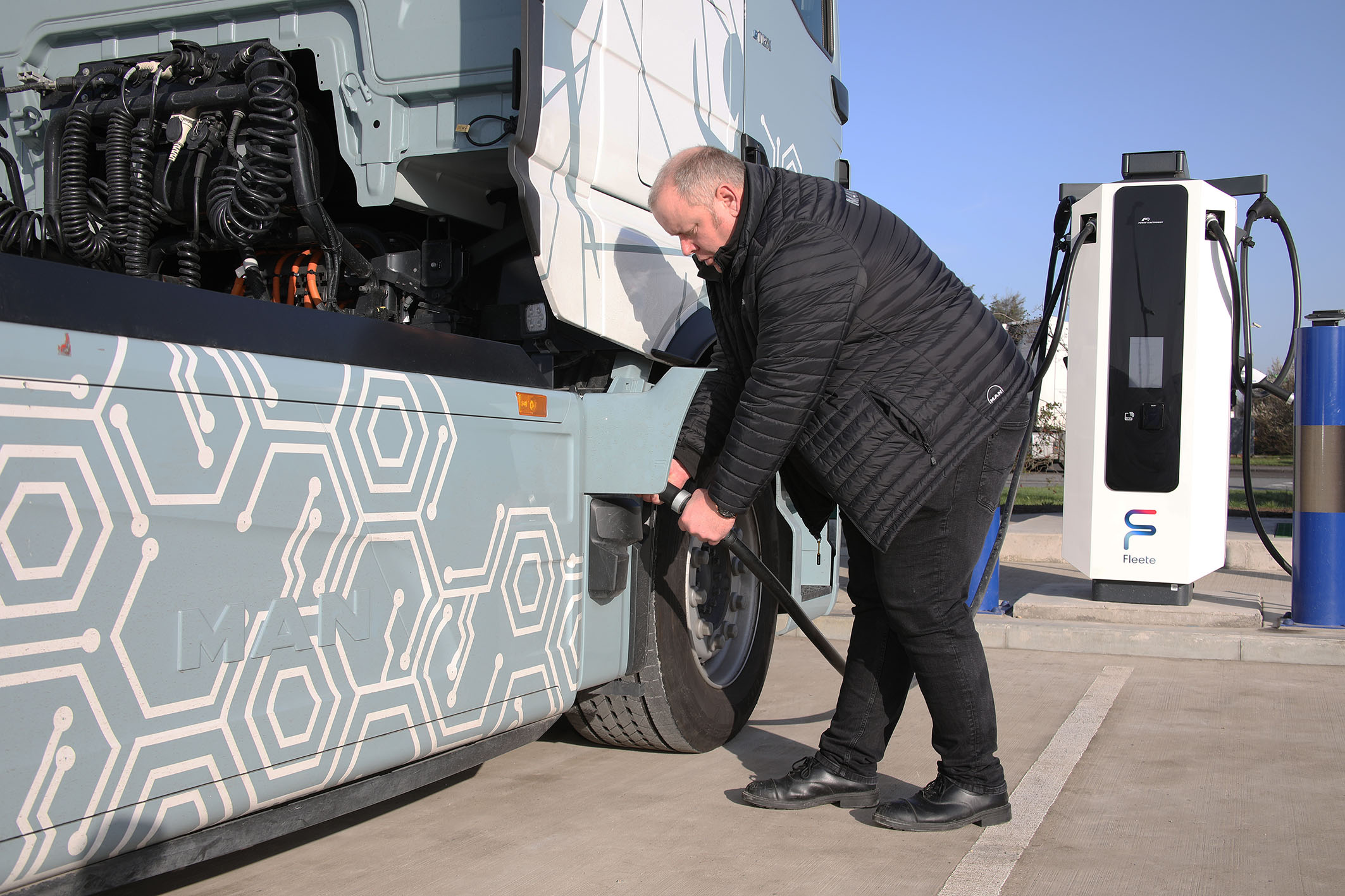
Brook Green Supply partnered with Fleete to create an energy supply strategy designed specifically for the operational realities of large-scale HGV charging infrastructure. Rather than approaching the project as a traditional procurement exercise, the focus was on building a solution that could support long-term growth while operating effectively within the Port of Tilbury’s private network environment.
A key element of the project was the development of a robust demand forecasting model. Drawing on Department for Transport data, HGV traffic volumes, projected fleet electrification rates and charging utilisation assumptions, Brook Green Supply helped Fleete build a long-term view of future energy requirements. This forecasting framework provided a clear foundation for procurement decisions, infrastructure investment and capacity planning.
Flexibility was built into the supply structure from the outset. Regular forecast reviews allow the strategy to evolve alongside actual charging demand, while a flex-lite procurement model combines flexible energy purchasing with fixed non-commodity costs. This approach delivers greater visibility over future expenditure while maintaining the agility required to scale operations over time.
Outcome
Creating an energy partnership designed for scale
Brook Green Supply helped Fleete move away from an inflexible, high-cost supply arrangement and establish a long-term energy strategy aligned with the realities of electric freight infrastructure.
The partnership enabled Fleete to launch and scale operations within the Port of Tilbury’s private DNO environment, with significantly improved visibility over both cost exposure and future demand requirements.
Rather than relying on static procurement, Fleete now operates with a structured framework that can evolve alongside real-world utilisation, supporting more informed decisions on infrastructure rollout and capacity planning.
This approach is also supporting wider expansion plans across the UK logistics network, including:
-
Megawatt charging infrastructure scaling from 1.2MW upwards
-
Planned new charging hubs in Birmingham and other major logistics locations
-
Potential additional capacity of 20–30MW across future UK sites
-
Participation in proposed Scottish freight corridor projects
With a more adaptable energy model in place, Fleete is positioned to scale its HGV charging network in line with the UK’s freight electrification journey.