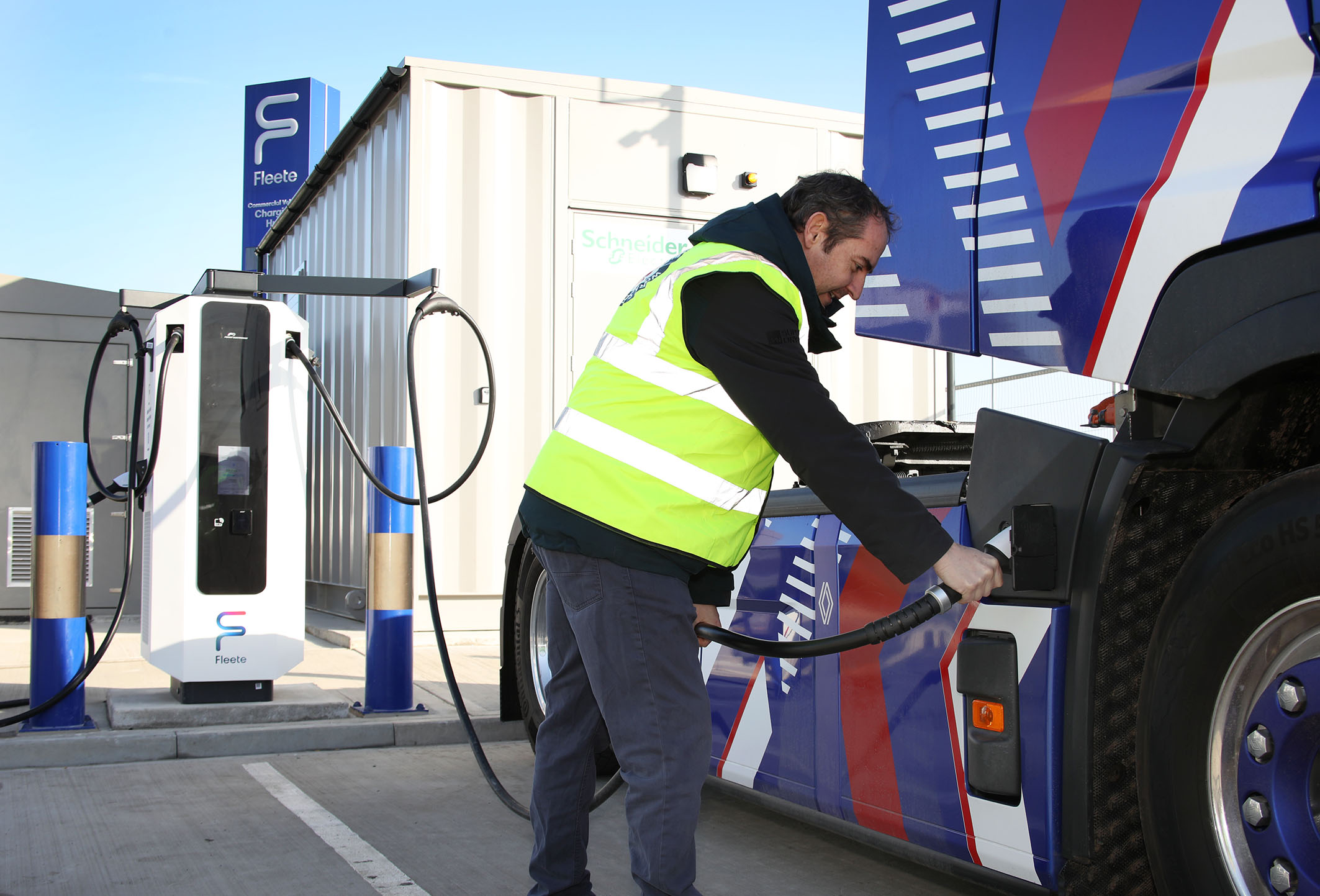
The future cost of EV charging: What businesses can't afford to overlook
Download the report



The UK's Zero Emission Vehicle (ZEV) mandate is accelerating the shift towards electric transport. But while the direction of travel is clear, the economics of electrification are far less straightforward.
For businesses investing in electric fleets and charging infrastructure, the upfront costs of vehicles, chargers and grid connections are only part of the equation. The long-term cost of powering them is harder to predict, and securing a competitive electricity price is only one piece of the puzzle.
Our new report, The Future Cost of EV Charging, uses bespoke modelling to examine four factors shaping commercial charging costs towards 2030: wholesale electricity prices, network and connection charges, geography, and capacity utilisation.
Looking at AC and DC public charging, bus depots and electric HGV depots, our findings highlight how differently these costs can affect businesses – and why today's decisions could have significant financial implications for years to come.
Wholesale electricity is only part of the price
When assessing EV charging costs, businesses naturally focus on wholesale electricity prices. Yet these can account for a surprisingly small proportion of the overall bill.
For our modelled DC public charging site, wholesale electricity represents around 55% of annual energy costs in 2026. For AC charging, that figure falls to just 23%, potentially dropping below 10% between 2027 and 2030 as network charges become more significant.
Securing a competitive wholesale price still matters, but understanding the full electricity cost stack is just as important.
Fixed network costs are rising
Businesses developing charging infrastructure need sufficient grid capacity to support their operations and future growth. But securing that capacity can come with significant ongoing costs, even when electricity consumption is low.
For our modelled high-voltage bus depot, annual Transmission Network Use of System (TNUoS) residual charges rose from £101,000 in 2023 to £193,000 in 2026, and are forecast to climb further to £414,000 by 2030.
These charges apply regardless of how much electricity a site consumes, creating a growing fixed cost for charging operators.
For businesses investing ahead of demand, factoring these costs into long-term planning is essential.
Location changes the economics
Network charges aren't uniform across Great Britain. Where charging infrastructure connects to the grid can make a substantial difference to operating costs.
For an otherwise identical 5MVA electric HGV depot, our modelling found a difference of more than £100,000 in annual Distribution Use of System (DUoS) charges across four selected regions in 2026.
For businesses planning new charging hubs or fleet depots, these variations could materially affect the investment case.
Alongside grid availability, transport links and property costs, the ongoing cost of using the electricity network should therefore be an important consideration when choosing a location.
Capacity only pays when it's used
Securing grid capacity for future demand can leave charging sites carrying substantial fixed and capacity costs before utilisation catches up.
Our modelled electric HGV depot has average grid capacity utilisation of just 1%, reflecting the early-stage charging demand assumed in our analysis.
When utilisation is low, these costs are spread across fewer units of electricity, increasing the effective cost per kWh.
This makes forecasting how charging demand will grow particularly important. Matching capacity to expected requirements can help businesses avoid unnecessary costs during the early years of operation.
What should businesses be considering now?
Taken together, these findings underline the importance of bringing energy strategy into EV infrastructure planning from the outset.
Before committing to new charging infrastructure, businesses should consider:
- Future demand: How will charging requirements change as fleets electrify?
- Grid capacity: Are connection requirements aligned with expected demand?
- Charging patterns: Could shifting or staggering charging reduce exposure to higher-cost periods?
- Location: How do regional network charges affect the business case?
- Energy procurement: Can purchasing arrangements adapt as consumption grows?
Considering these factors early can help businesses manage costs and make better-informed investment decisions.
How we can help
At Brook Green Supply, we work with large and complex energy users to develop electricity supply strategies tailored to their operational requirements.
From demand forecasting and scenario modelling to flexible procurement, energy analytics and load management, we help businesses understand their cost exposure and plan for changing electricity needs.
As fleet electrification gathers pace, understanding the full cost of charging will be essential to making the economics work.
For a closer look at the findings, download our report – The Future Cost of EV Charging – in full.